Pain Lives in the Brain: Why Better Boy Maps Can Help You Move with Less Pain
When something hurts, it is natural to focus on the painful area. Those tissues matter, but pain is not created by the tissue alone. Pain is an out of the brain.
5/25/20263 min read
When something hurts, it is natural to focus on the painful area.
A sore knee.
A tight shoulder.
A stiff back.
A cranky hip.
Those tissues matter. Muscles, joints, fascia, nerves, and connective tissue all play a role in how you feel and move.
But pain is not created by the tissue alone.
Pain is an output of the brain.
That means your brain is constantly asking questions:
Where is this body part?
Is it moving well?
Is it safe?
Do I need to protect it?
When the brain has clear information, movement tends to feel more coordinated, controlled, and safe.
When the brain has unclear information, it may increase protection. That protection can show up as tension, stiffness, guarding, hesitation, or pain.
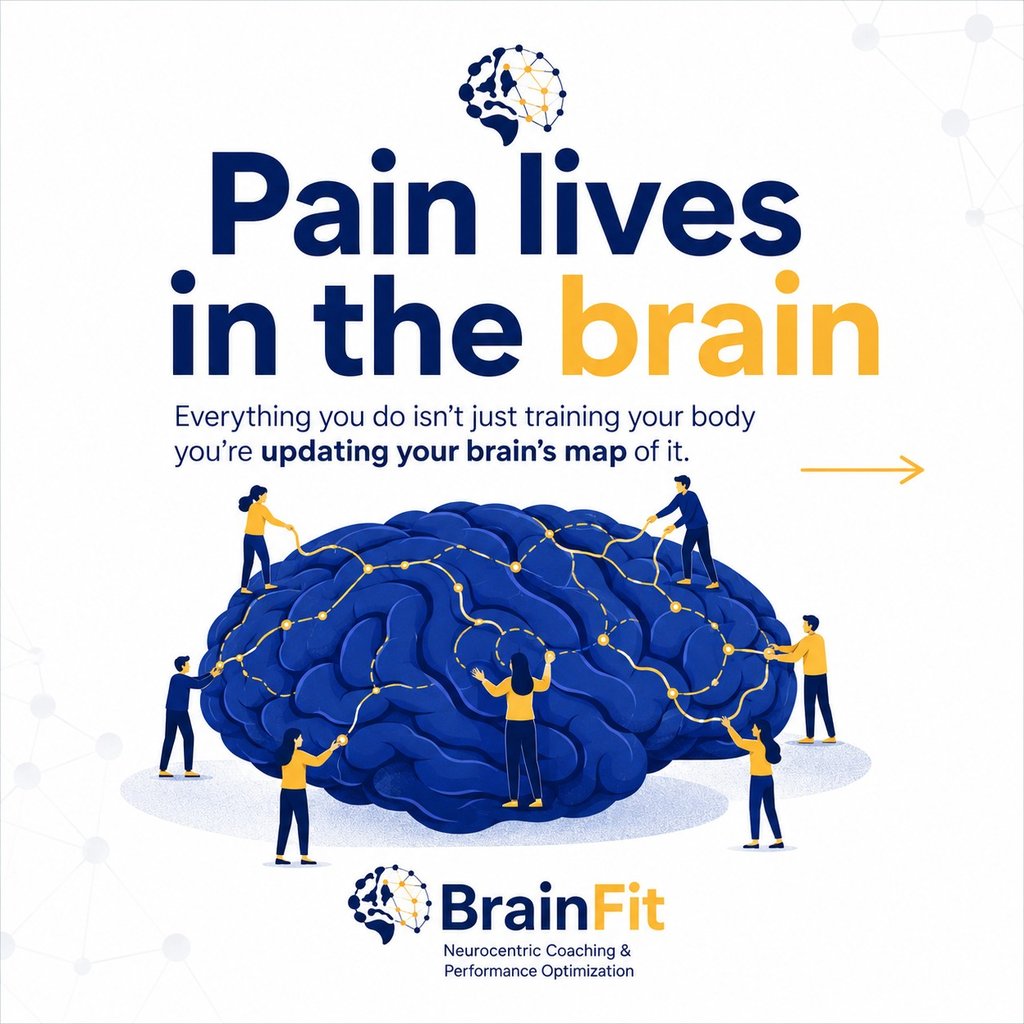
Your brain has a map of your body
Your brain maintains internal maps of your body.
These maps help you know where your joints are, how your muscles are behaving, how much force you are using, and what movement options are available.
You do not need to look at your elbow to know where it is.
You do not need to stare at your ankle to know whether it is bent or straight.
That awareness comes from sensory information constantly traveling between your body and your brain.
Your visual system, vestibular system, proprioceptive system, skin receptors, joints, muscles, and connective tissues are all sending information back to the brain.
The brain uses that information to build a working map of you.
A blurry map can create more problems
When the map is blurry, the brain has less certainty.
Less certainty often means more threat.
That does not mean you are damaged. It means the brain may not fully trust the available information.
If the brain is not sure where something is, how it moves, or whether it can be controlled, it may respond by increasing protection.
That protection may look like:
More muscle tension
Reduced range of motion
Slower movement
Poor coordination
Guarding
Pain or discomfort
A feeling that the area is unreliable
This is why pain can persist even after tissue healing has occurred. The body may be structurally “okay,” but the brain may still be operating from an outdated or unclear map.
A clear map supports better control
The goal of neurocentric training is not to ignore the body.
The goal is to give the brain better information so it can make better decisions.
Clearer sensory input can help the brain improve its map.
A better map can lead to:
Improved coordination
Less unnecessary tension
Smoother movement
Better balance
More confidence
Reduced protective responses
More efficient strength and mobility work
This is why small, precise drills can sometimes create noticeable changes.
A wrist circle is not just a wrist circle.
An eye drill is not just an eye drill.
A breathing drill is not just breathing.
A balance drill is not just balance.
Each one sends information to the brain.
Every movement is training your brain
You are always training your brain.
Every repetition teaches the nervous system something. Every movement either reinforces the current map or helps update it.
That is why quality matters.
If you move with poor awareness, excessive tension, or compensation, your brain practices that pattern.
If you move with precision, control, and clear sensory feedback, your brain receives better information.
Over time, better information can support better movement.
A simple example: the wrist circle
Take a wrist circle.
Most people think of it as a local joint movement.
But your brain is involved in every part of that action.
It needs to know where the wrist is, how the fingers are positioned, how much tension is present in the forearm, whether the shoulder is helping too much, and whether the movement feels safe.
If the brain has a clear map of the wrist and hand, the circle may feel smooth and easy.
If the map is blurry, the movement may feel stiff, shaky, restricted, painful, or disconnected.
In that case, the goal is not to force the movement harder.
The goal is to improve the information.
Slower movement.
Smaller range.
More attention.
Better sensory feedback.
Less threat.
That is how you begin updating the map.
Train the map, change the outcome
Pain reduction is not just about stretching tight muscles or strengthening weak ones.
Those things may help, but they are only part of the picture.
If you want better movement and less unnecessary pain, you also need to consider the brain’s role.
The brain decides how much tension is needed.
The brain decides whether movement feels safe.
The brain decides whether protection is necessary.
The brain decides how your body organizes itself.
When you improve the map, you improve the system’s ability to move with confidence.
Better brain input can mean better movement output.
And better movement can change how you feel.
Takeaway
Pain is not simply a message from one tissue. It is a protective response created by the brain based on the information it receives.
When the brain has a clearer map of the body, it can make better decisions.
That is why neurocentric training focuses on improving sensory input, movement precision, and brain-body communication.
Train the brain. Transform your movement.